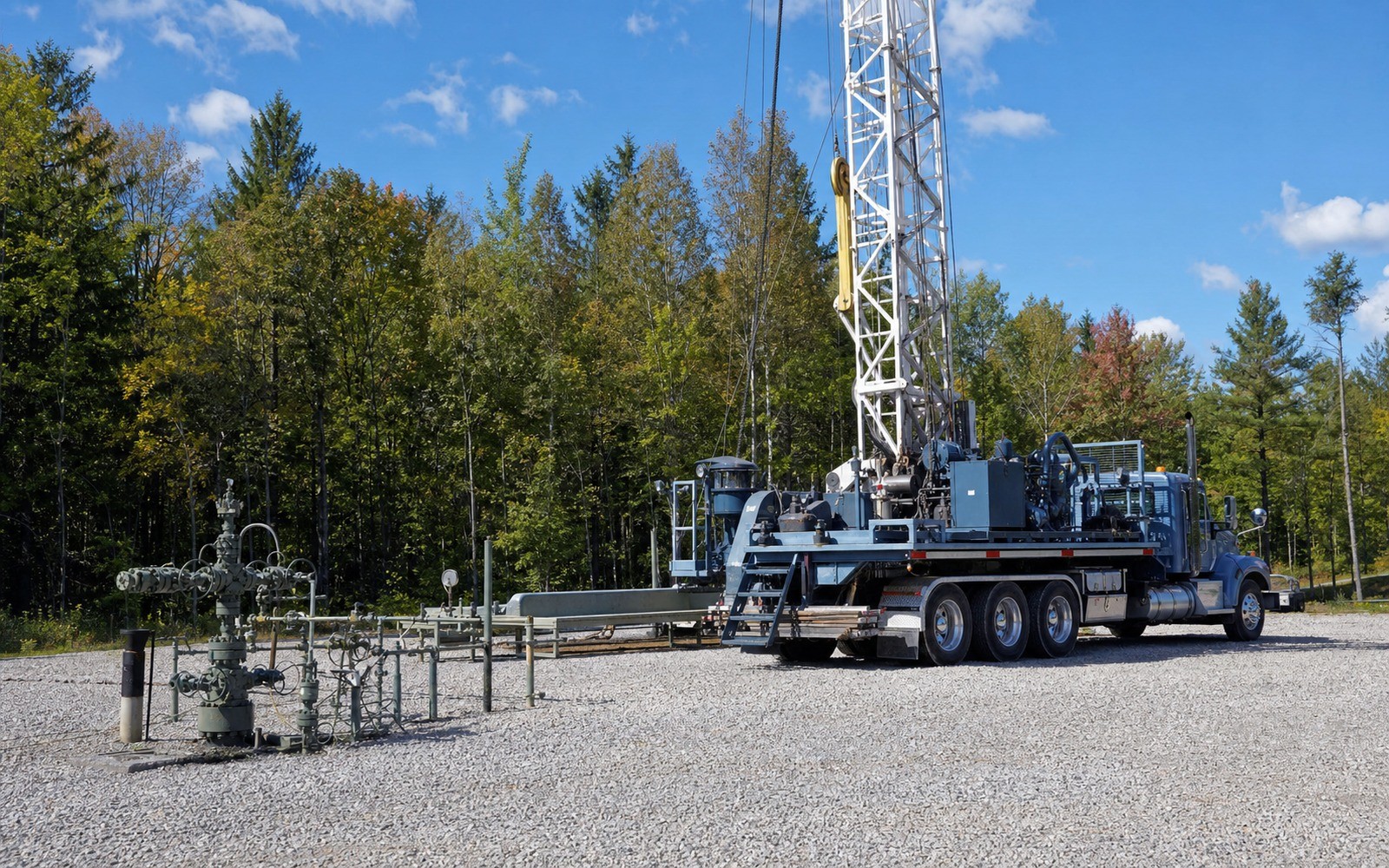
Antrim Shale Mineral Rights
The Antrim doesn't crash the way the shale plays out west do. It just sits there, paying a little, for a long time.
If you own minerals in Otsego, Antrim, Kalkaska, or one of the other northern Michigan counties over this play, you already know it doesn't behave like the plays you read about in the news. There's no headline drilling boom here anymore, and there hasn't been one in a long time. What's producing now has mostly been producing since the late 1980s and 1990s.
That steadiness is actually the interesting part of an Antrim decision. It's a different kind of math than a hot shale play, and it deserves a different conversation.
Not Like the Shale Plays You've Read About
The Antrim is a shallow, naturally fractured Devonian shale that produces biogenic gas, meaning it formed from bacterial activity rather than the heat and pressure that cooked the deeper shales. Wells here were cheap to drill compared to almost anything in Texas or Oklahoma, and they don't have the violent first-year decline you see in a modern horizontal well. Instead they tend to settle into a long, low, gently sloping production curve.
That's why an Antrim royalty check often looks the same this year as it did five years ago, give or take gas price movement. There isn't usually a dramatic story behind a change in your statement. It's just the play doing what it's always done.
Why Your Check Barely Moves Month to Month
With biogenic gas, there's rarely a single well dominating your unit's output the way there might be with a big shale frac. Production is spread thin and flat, so your check tends to track gas price more than any new drilling news. Most of the wells over Antrim acreage were drilled decades ago and have already gone through whatever decline they were going to go through. What's left is close to a stable tail.
That predictability is worth something. It also means there's rarely a reason to wait for a new well to come in and change your numbers, because in most of this field, that new well isn't coming.
What a Sale Actually Looks Like on a Play Like This
Because Antrim production is so stable, valuing an interest here is more about the track record on your specific wells than about guessing at future development. We'll look at your last few years of statements, check on well status with the state, and put a number together based on what's actually flowing, not on speculation about a boom unlikely to happen in this play.
For owners managing a small, steady check that isn't going to change much either direction, a lump sum can make more sense than collecting the same modest amount for another decade or two.
We also see a fair number of Antrim owners who've simply lost track of what they own, sometimes because a well changed operator names two or three times over the decades, or because the interest passed down through a family without much paperwork attached. Sorting that out first is often more useful than talking numbers, since you can't really price something until you know exactly what it is.
Questions We Would Ask If These Were Still Our Minerals
These are practical questions an owner can answer without arriving with a perfect title file or a commitment to sell.
Why hasn't my Antrim Shale check changed much in years?
Because most Antrim wells are old, shallow, and already past their steep decline. What's left is a long flat tail that mostly tracks natural gas price rather than new drilling activity.
Is there any new drilling happening in the Antrim today?
Very little. This play was mostly developed in the 1980s and 1990s, and there hasn't been a meaningful drilling resurgence since. Most of what you see today is legacy production.
Does a stable, low check mean my interest isn't worth much?
Not necessarily. Stable production has predictable value even if the dollar amount is modest. We factor in the well's history and remaining life, beyond the size of last month's check.
My Antrim interest is split among several family members. Can you still buy it?
Yes. We regularly purchase fractional and co-owned interests. If your family wants to simplify things and stop dividing a small check five ways every quarter, we can make that easy.
The operator name on my Antrim statement has changed over the years. Is that normal?
Yes, it's common for older Michigan gas assets to change hands as smaller operators sell off legacy packages. As long as the well itself is still producing, ownership changes at the operator level don't affect your underlying interest.
How long does it take to close on an Antrim Shale interest?
Once we've confirmed ownership and reviewed your statements, closing typically moves quickly since there's rarely complicated title work involved with a mature, well-documented Michigan interest like this one. Most sales wrap up within a few weeks.
Do you buy Antrim interests anywhere in Michigan, or just certain counties?
We buy across the productive footprint of the play, including Otsego, Antrim, and Kalkaska counties, along with the surrounding areas where this shallow gas has historically been developed.
Tell us the county and state, how the minerals came to you, whether they are producing, and which records are close at hand.